
What Size Heat Pump Do I Need for My Ontario Home?
If you search “what size heat pump do I need,” you’ll find dozens of calculators that use square footage as the answer.
1,500 square feet equals 2 tons.
2,000 square feet equals 3 tons.
It sounds simple. In Ontario, it is not.
Homes in Oshawa, Whitby and across Durham Region behave very differently depending on insulation, windows, air leakage, ceiling height and duct design. Two homes with identical square footage can require completely different equipment sizes.
Choosing the correct heat pump size is one of the most important parts of the entire installation. It is also one of the most misunderstood.
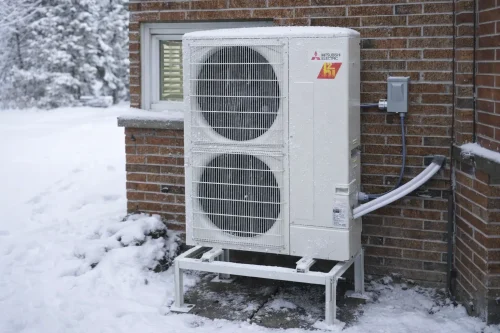
Why Square Footage Is Not Enough
Square footage does not tell you how much heat your home loses in January.
A 1960s bungalow with original insulation and drafty windows will lose far more heat than a modern North Oshawa build with upgraded envelope performance. Even something as simple as duct layout can change the way a system performs.
Many older furnaces were oversized, so replacing equipment “like for like” often locks in the same mistake.
This is why HVAC Zack does not size heat pumps based on square footage or existing furnace tonnage alone. The numbers have to come from the home itself.
The Proper Way to Size a Heat Pump in Ontario
Correct sizing starts with a heat loss and heat gain calculation.
This evaluates insulation levels, window ratings, air infiltration, wall construction and Ontario’s winter design temperatures. It calculates how many BTUs the home loses at peak cold and how much cooling is required in summer.
For new construction, this calculation is typically completed within the mechanical package. For retrofit projects, it must be done before equipment is selected.
Oversizing creates comfort and efficiency problems. Undersizing creates performance issues during extreme cold. The goal is balance.
What Happens When the System Is the Wrong Size
Sizing mistakes show up quickly during Ontario winters.
If the system is too small, it runs constantly and depends heavily on electric backup during cold snaps. When temperatures drop to minus twenty five degrees Celsius or lower, most standard homes cannot rely on a heat pump alone.
If the system is too large, it short cycles. That means frequent on and off operation, uneven temperatures and reduced summer dehumidification. Equipment life can also suffer.
Bigger is not better. Correct is better.
Why Hybrid Systems Make More Sense in Ontario
Heat pumps perform best in hybrid systems in our climate.
Instead of forcing the heat pump to carry one hundred percent of the heating load at extreme temperatures, it works alongside a high efficiency gas furnace. The heat pump handles shoulder seasons and moderate winter days efficiently. The furnace takes over when it becomes the more practical heat source.
This approach improves long term performance and cost control.
A properly configured hybrid system provides:
- Efficient electric heating through fall and spring
- Reliable gas backup during deep cold
- Reduced strain on auxiliary electric heat
- Better annual operating balance
The crossover temperature is set based on performance curves and real world conditions, not guesswork.
A Real Example
A recent homeowner assumed a three ton system was required based on square footage alone. After reviewing insulation levels, window performance and duct layout, the correct load calculation showed the home required a two ton system paired with hybrid backup.
Installing the larger unit would have caused short cycling and airflow imbalance. Correct sizing protected comfort and efficiency.
This is why the math matters.
So What Size Heat Pump Do You Need?
You cannot know without evaluating the home properly.
If someone provides a firm system size without reviewing insulation, duct layout and performing a proper heat loss calculation, they are estimating.
In Ontario’s climate, estimation can become expensive.
If you are considering a heat pump installation in Oshawa, Whitby, Ajax, Pickering, Port Perry or Bowmanville, HVAC Zack sizes systems based on real load data and practical hybrid strategy.
The right size system will:
- Maintain comfort during cold snaps
- Integrate cleanly into a hybrid setup
- Avoid unnecessary electric backup use
- Operate efficiently year after year
Start with the correct size and everything else works better.
FAQs
How many square feet does a 2 ton heat pump cover?
There is no fixed square footage rule. In Ontario, coverage depends on insulation levels, air leakage, window performance, and duct design. A proper heat loss calculation is required to determine correct sizing.
Do heat pumps work at minus 25 degrees in Ontario?
Heat pumps can operate at very low temperatures, but most standard Ontario homes require hybrid backup heat during extreme cold. A properly configured dual-fuel system ensures reliable performance during deep winter.
Is it better to oversize a heat pump?
No. Oversizing causes short cycling, reduced summer dehumidification, temperature swings, and increased wear on equipment. Correct sizing improves comfort, efficiency, and long-term reliability.