
Heat Pump Defrost Cycles: What’s Normal in Durham Winters and When to Worry
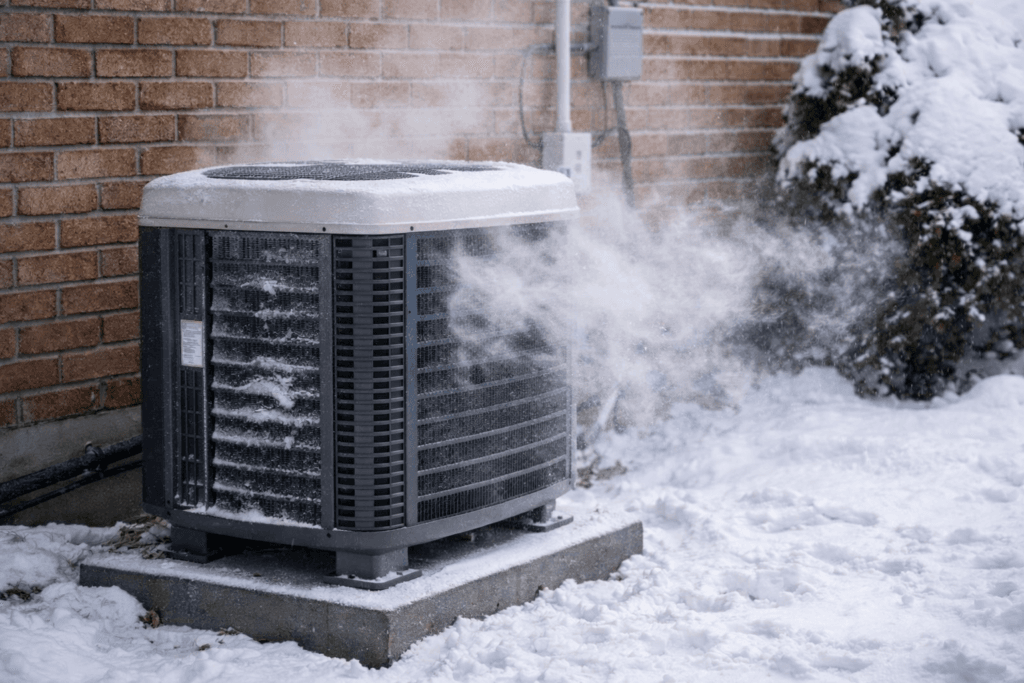
When temperatures dip below freezing in Durham Region, outdoor heat pump units will occasionally fog up the backyard with clouds of steam and may even stop the outdoor fan for a few minutes. That is the defrost cycle doing its job.
A properly set system will clear frost from the coil, restore airflow, and go right back to heating. The key is knowing the difference between normal defrost behaviour and a fault that needs service.
Why frost forms and how defrost actually works
A heat pump gathers low-temperature heat from outdoor air and moves it indoors. As outdoor air passes across a very cold coil, moisture in the air condenses and freezes on that coil. Left alone, ice blocks airflow and slashes capacity.
Modern systems watch coil temperature and run time, then periodically reverse the refrigeration cycle to melt that ice. During defrost the outdoor fan usually stops, refrigerant flow changes direction, you may hear a whoosh at the reversing valve, and you will see steam as the ice turns back into water. On a healthy system this cycle is short, clean, and only as frequent as conditions require.
What “normal” looks and sounds like
On a typical cold, humid day in Oshawa or Whitby you might see a defrost every 30 to 90 minutes, lasting two to ten minutes. The outdoor fan pauses. Steam rises off the unit and drifts away. You may hear gurgling or a short swish as valves shift.
When the cycle ends, the fan restarts, the steam stops, and supply air temperature at the registers stabilizes again. Indoors, most homeowners notice only a brief dip in discharge temperature that recovers quickly. If you have a hybrid setup, the furnace may supply backup heat during defrost to keep room temperatures steady.
When defrost behaviour points to a problem
Defrost is protective by design, so frequent or messy defrosting is a sign to check the basics. Red flags include cycles that happen every ten to fifteen minutes under mild conditions, ice that never fully clears, thick rime ice on the coil face, or the unit getting louder after defrost rather than quieter.
Sometimes the cause is simple, such as a clogged outdoor coil, a matted snow fence, a unit that has settled and is pooling meltwater, or shrubs crowding the intake side. Other times the issue is control-related, such as a failed sensor or a reversing valve that does not shift cleanly.
If the outdoor unit is surrounded by a skating rink of refrozen meltwater or you see the coil encapsulated in ice after defrost, it is time for a service call.
Site placement and setup that prevent headaches
Good installs defrost less and recover faster. We place outdoor units on a level pad high enough to drain, keep the back and sides clear for intake, and route downspouts away so meltwater does not refreeze back into the coil.
In tighter Pickering and Ajax side yards this matters, because wind shadows and fence corners can trap drifting snow against the intake. We also verify that defrost control settings match the equipment, the refrigerant charge is correct, and the house controls are set to keep the balance point sensible on hybrid systems.
Little choices at install time add up to quieter operation and fewer nuisance service calls.
What you can check as a homeowner
You do not need to diagnose refrigeration, but you can keep the outdoor unit breathing. Brush off loose snow without bending fins, clear leaves and fluff from the coil surface, and make sure meltwater can run away from the pad. Keep at least 18 to 24 inches open around the unit, especially on the intake side.
If you notice repeated short cycles, unusual noises, or the unit getting encased in ice, shut it down and call for service. The earlier we see it, the smaller the fix.
How HVAC Zack handles defrost complaints
On a defrost-related call we start with the simple wins: airflow around the unit, pad level and drainage, coil cleanliness, and any visible ice bridges.
We check sensors, control logic, and the reversing valve operation, then verify charge and look for restrictions. If you have a hybrid heat pump and furnace, we confirm the lockout temperature and balance point so the furnace covers deep-cold hours while the heat pump carries the rest.
The goal is predictable comfort, low noise, and no surprise shutdowns during a cold snap.
Ready for help or a quote?
If your heat pump is steaming every few minutes, not clearing ice, or struggling to heat during defrost, we can diagnose and correct the root cause. Start here: Heat Pumps. Planning an upgrade or a hybrid setup for deeper cold days? See Furnace Install & Repair and Financing to spread costs out.