
Are Heat Pumps Worth It in Canada? An Ontario Technician's Honest Answer

It is one of the most common questions I get from homeowners across Durham Region right now, and it is a fair one. Heat pumps are being pushed hard by contractors, utilities, and the federal government, and the marketing can make them sound like a no-brainer. So let me give you a straight answer based on fifteen years of installing and servicing heating and cooling systems in Oshawa, Whitby, Ajax, Pickering, Bowmanville, and Port Perry.
For most Ontario homeowners in 2026, yes, a heat pump is worth it. But the answer depends on what you are replacing, what your home looks like, and whether you qualify for the rebates that change the math dramatically. This post walks through all of it.
Upfront Costs vs. Rebates: What to Expect
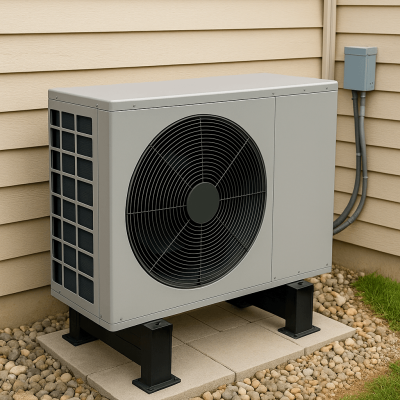
A heat pump does not generate heat the way a furnace does. Instead of burning gas or using electric resistance to create warmth, it moves heat from one place to another using refrigerant. In winter, it pulls heat out of the outdoor air and transfers it inside. In summer, it reverses the process and acts as an air conditioner. One piece of equipment handles both.
The reason this matters for efficiency is straightforward. Moving heat takes far less energy than making it. A well-sized cold-climate heat pump will typically deliver three to four units of heat energy for every one unit of electricity it consumes. That ratio is called the coefficient of performance, or COP, and it is why heat pumps can cut heating costs even in a province where electricity is not cheap.
The question Canadians reasonably ask is whether heat pumps work in serious cold. The short answer is yes, with the right equipment. Modern cold-climate units from manufacturers like Mitsubishi are rated to operate efficiently down to -25°C or lower. Natural Resources Canada confirms that air-source heat pumps have become a proven, practical technology for Canadian winters, not just mild coastal climates. Durham Region sits in a climate zone where this equipment performs well without requiring a backup system to carry the full load through winter.
What It Costs in Ontario — and What the Rebates Cover
Installed cost for a cold-climate air-source heat pump in Ontario typically runs between $8,000 and $15,000 depending on the size of the home, whether ductwork needs modification, and which brand and model is specified. Larger homes or homes requiring a mini-split or multi-zone setup will sit at the higher end. This is more than a straight furnace replacement, which is why the rebate picture matters so much.
Ontario Home Renovation Savings Program (HRS)
The current provincial rebate program for heat pumps is the Home Renovation Savings Program, a joint initiative between Enbridge Gas and the Independent Electricity System Operator. It replaced the previous Home Efficiency Rebate Plus program in January 2025 and currently pays up to $7,500 for a qualifying cold-climate air-source heat pump installation. If your home currently uses a ground-source system or you are upgrading to geothermal, the rebate ceiling rises to $12,000.
Rebate amounts are calculated per ton of heat pump capacity. Gas-heated homes receive $500 per ton, while homes heated by electricity, oil, propane, or wood receive $1,250 per ton. A typical Durham Region home needing a three-ton system would receive $1,500 if switching from gas, or $3,750 if switching from electric baseboards. Homes replacing oil or propane heat see the most significant rebate benefit per ton.
One important timing note: the HRS program registration window for 2026 closes May 31, 2026. If you are considering an installation this year, that deadline matters. The full rebate details and eligibility requirements are covered in a separate post on this site, but the short version is that you need to own the home, it must be a low-rise residential property, and you need to pre-register before work begins.
The Oil-to-Heat-Pump Affordability Program
For homeowners in Durham Region who currently heat with oil, the federal Oil to Heat Pump Affordability Program provides up to $10,000 toward the cost of switching to a heat pump. Oil-heated homes in Bowmanville, Port Perry, and the rural parts of Durham Region often have the strongest financial case for switching because the fuel cost savings are larger and the federal incentive is more substantial.
What the Numbers Look Like After Rebates
A homeowner in Whitby replacing an aging gas furnace and central AC with a cold-climate heat pump might pay $10,000 to have one installed. After the HRS rebate, net cost comes down to $8,500 or less depending on equipment size. A homeowner in Bowmanville replacing an oil furnace might pay a similar gross amount but receive the full federal incentive, bringing net cost down to $1,000 to $3,000. The variance is significant, which is why the rebate conversation needs to happen before anyone commits to a system.
Find Out What a Heat Pump Would Cost Your Home. Get a Free Quote.
HVAC Zack provides assessment of your needs and completes the rebate application for you. No upselling, no pressure.
What Durham Region Homeowners Actually Save
Energy savings depend heavily on what you are replacing. The comparison that makes the strongest financial case is replacing electric baseboard heating, where heat pumps routinely cut heating costs by 50 to 70 percent because the baseline is so expensive. Replacing a high-efficiency gas furnace produces a narrower margin, typically 20 to 35 percent on the heating side, though the heat pump also handles your summer cooling so you are eliminating a separate AC bill entirely.
Ontario electricity rates matter here. Time-of-use billing means running your heat pump during off-peak hours, overnight and on weekends, costs significantly less than mid-afternoon operation. Homeowners with programmable or smart thermostats who shift their heating load to off-peak hours tend to see the best results. This is worth discussing with your installer before commissioning the system.
In practical terms, a Durham Region homeowner replacing a mid-efficiency gas furnace and an aging central AC with a properly sized cold-climate heat pump should expect annual operating cost savings in the range of $600 to $1,400 depending on home size, insulation, and usage patterns. That is a rough range, not a guarantee, and anyone promising you a specific dollar figure without doing a load calculation on your home is guessing. The heat pump cost breakdown for Durham Region has more on what drives that range.
The Payback Period
After rebates, most Durham Region homeowners see a payback period somewhere between four and eight years on a heat pump installation replacing a gas system. For oil or propane replacements the payback is often shorter, sometimes two to four years, because the annual fuel savings are larger. After payback, the savings run for the remaining life of the system, which for a quality cold-climate unit with proper maintenance is typically fifteen to twenty years.
Whether that timeline works for you depends on your circumstances. If you are planning to sell the home in two years, the ROI picture looks different than if you intend to stay for ten. If you are already spending $3,500 a year on oil heat, the calculus tips sharply toward switching. If you have a two-year-old high-efficiency gas furnace and a functioning central AC, the financial urgency is lower even though the long-term case still holds. This is why I spend time on every quote call understanding the homeowner’s actual situation rather than leading with a product recommendation. You can read more about the heat pump versus furnace comparison for Durham Region if you want a deeper breakdown of that decision.
How Heat Pumps Perform in Ontario Winters
This is where most of the misinformation lives. Heat pumps have historically struggled in Canadian winters, and that reputation was earned by older equipment. It no longer reflects what modern cold-climate units can do.
Durham Region design temperatures sit around -18°C to -20°C on the coldest nights. A Mitsubishi Hyper Heat unit, which is what I most commonly install in this area, is rated to produce heat efficiently down to -25°C. At design temperature, it is still delivering meaningful output without auxiliary heat strips. Most winter nights in Oshawa, Whitby, Ajax, and Pickering do not get close to design temperature, which means the heat pump is operating well within its comfort zone for the bulk of the heating season.
The nuance is that very cold nights, the handful of nights per year in Durham Region where temperatures drop below -20°C, require the equipment to work harder. On a standalone heat pump system, a backup heat source is typically included for exactly those conditions. On a hybrid system, the gas furnace carries those coldest nights while the heat pump handles everything above the lockout temperature. The hybrid heat pump setup explained for Durham Region post covers how that configuration works in detail.
What some homeowners notice when they switch is that heat pump air feels different from furnace air. A furnace blows air at 50°C to 60°C in short, intense bursts. A heat pump delivers a steadier, gentler warmth at lower air temperatures but runs for longer cycles. The home stays just as warm but the air coming from the vents does not feel as hot. Some people prefer this. Some need an adjustment period. Either way, the thermostat setpoint is what matters for comfort, not the temperature of the air coming out of the vent.
Who Should Get a Heat Pump in Ontario — and Who Should Wait
The financial case is strongest for homeowners currently heating with oil, propane, or electric baseboards, for anyone whose furnace or AC is at end of life and facing replacement anyway, and for homeowners who plan to stay in their home long enough to see the payback period through. If you tick two or three of those boxes, the conversation about heat pumps is worth having now.
The case is weaker for homeowners with a relatively new, high-efficiency gas furnace that has years of life left, for people who are planning to move within the next two to three years, and for homes with significant ductwork problems or insulation issues that would need to be addressed to get full performance from a heat pump. That last point is important: a heat pump in a leaky, poorly insulated house will work but it will not deliver the efficiency gains you are expecting, and the money is better spent on the envelope first.
There is also a sizing question that separates a good installation from a bad one. An oversized heat pump short-cycles, wears out faster, and leaves homes feeling humid and uncomfortable. An undersized one cannot keep up on the coldest days. Getting the load calculation right before specifying equipment is not optional, and any contractor who gives you a price without doing one is guessing at the size. The heat pump sizing guide for Ontario homes covers what that calculation involves and why it matters.
What Makes Durham Region a Good Market for Heat Pumps
Southern Ontario sits in a climate zone that gets the most out of cold-climate heat pump technology. The winters are serious but not extreme by Canadian standards, the summers are warm and humid enough that cooling costs are real and the heat pump’s dual function adds value, and the rebate programs available to Ontario homeowners are among the most generous in the country right now.
The mix of housing in Durham Region also suits heat pumps well. Older bungalows in Oshawa and Whitby that are still running oil or propane furnaces are prime candidates for the full federal incentive. Mid-century detached homes in Ajax and Pickering replacing aging gas systems can take advantage of the HRS rebate and eliminate a separate AC unit in the same job. Newer builds in Bowmanville and the north end of Oshawa are increasingly being built with heat pump-ready electrical service, making the retrofit straightforward when the time comes.
If you are in Oshawa, Whitby, Ajax, Pickering, Bowmanville, or Port Perry and want to know specifically whether a heat pump makes sense for your home, the most useful next step is a quote conversation rather than more research. I can look at your current system, your home’s heat loss, your fuel costs, and the rebates you qualify for and give you a real number. Start at the heat pump service page or book a quote directly.
A Note on Choosing an Installer
One of the most common problems I see when I go out to service a heat pump someone else installed is equipment that was sized incorrectly, commissioned without proper airflow measurement, or placed without considering defrost drainage and clearances. The equipment works fine when it is installed right. The frustration people have with heat pumps is almost always an installation problem, not a technology problem. If you are getting quotes, this guide on what to look for in a heat pump installer in Durham Region is worth reading before you sign anything.
Ready to Find Out If a Heat Pump Is Worth It for Your Home?
About The Author
Zack Laundrie is a licensed and insured HVAC technician with over 15 years of hands-on experience serving Durham Region homeowners. He specializes in heat pump installation, hybrid systems, and honest diagnostics across Oshawa, Whitby, Ajax, Pickering, Bowmanville, and Port Perry.